Searching for the best cancer hospital in Nepal can feel overwhelming, especially after a diagnosis. You may be worried about treatment, costs, and where to begin.
Start by looking for a hospital with specialists who treat your cancer type, clear diagnosis and staging, access to the treatment you need, and reliable follow-up support. Ask whether the doctors explain your options in a way you understand.
At Dr Bhatia Cancer Hospital in Lucknow, our website focuses on oral and head and neck cancer care . This guide is written to help patients and families compare their options and prepare for a consultation, whether they are considering care in Nepal or outside the country.
Quick Answer
When looking for the best cancer hospital in Nepal, check whether the hospital has specialists for your cancer type, accurate diagnosis and staging, suitable treatment options, multidisciplinary review, clear costs, and reliable follow-up support.
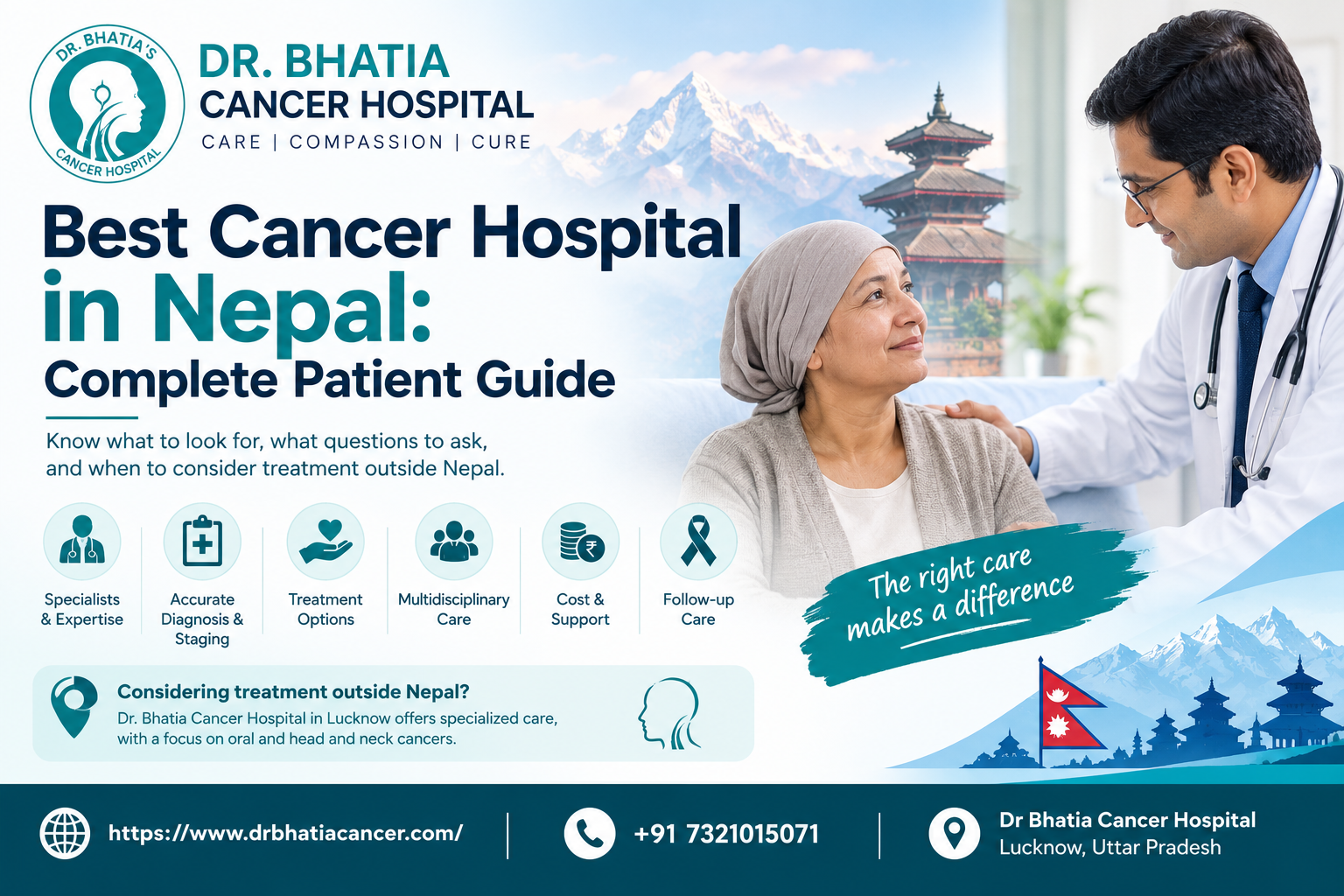
A practical guide to comparing cancer hospitals and treatment options.
How to Choose the Best Cancer Hospital in Nepal
The right hospital depends on your diagnosis and individual needs. A hospital name or an online ranking cannot tell you whether a centre is suitable for your case.
Use the following checklist when comparing an oncology hospital in Nepal.
1. Specialists Who Treat Your Cancer Type
Ask who will assess your case and lead your treatment.
Find out whether the doctor regularly treats your specific cancer. For example, someone with oral cancer should ask about experience in oral and head and neck cancer care.
Choose a team that listens, explains things clearly, and gives you time to ask questions.
2. Clear Diagnosis and Cancer Staging
Before treatment begins, ask the doctor to explain:
- What type of cancer do I have?
- Where did it start?
- What do my test results show?
- Has the stage been confirmed?
- Do I need any further tests?
Diagnosis may involve an examination, scans, laboratory tests, and a biopsy. A biopsy means taking a tissue sample for testing. In many cases, it is needed to confirm cancer.
Staging describes how extensive the cancer is, including its size and whether it has spread. This information helps doctors plan treatment.
3. Access to the Treatments You Need
Ask which treatments are recommended for you and why.
For head and neck cancers, options may include surgery, radiation therapy, chemotherapy, targeted therapy, immunotherapy, or a combination. The choice depends on the cancer and the patient’s health.
Confirm which services are provided at the hospital and which require a referral elsewhere. This helps you understand where each part of your care will take place.
4. Review by Different Specialists
Ask whether your case can be discussed by specialists from different areas of cancer care. This is often called a multidisciplinary review or tumour board.
Useful questions include:
- Who will take part in the discussion?
- Will my biopsy and scans be reviewed together?
- Who will explain the final recommendation?
- Who will coordinate my appointments?
5. Clear Costs and Payment Information
Request a written estimate based on the proposed treatment plan.
Ask whether it includes:
- Consultations and tests
- Procedures or surgery
- Medicines and treatment sessions
- Hospital stay
- Rehabilitation and follow-up
Also ask what could change the estimate. Confirm insurance or financial support directly with the hospital and the relevant provider.
6. Follow-up and Patient Support
Before choosing a cancer specialist hospital in Nepal, ask what happens after treatment.
Who will arrange follow-up visits? Whom should you contact about side effects? Can some follow-up care happen closer to home?
For oral and head and neck cancer, ask about support for eating, speaking, and swallowing, where needed.
Why Cancer Type and Stage Matter
Cancer is not one single disease. Two patients with different cancers may need very different care. Even patients with the same cancer type may receive different treatment plans.
The Cancer’s Location Affects the Plan
For head and neck cancer, doctors consider the exact location of the tumour. They also discuss how treatment may affect speech, eating, breathing, and appearance.
The Stage Helps Guide Treatment Decisions
Cancer limited to its original area may need a different approach from cancer that has spread. Ask your doctor to explain what the stage means for your specific diagnosis.
A stage number alone does not explain your full situation. Your reports and clinical assessment matter too.
Your Health and Priorities Also Matter
The treatment plan may depend on your general health and ability to tolerate treatment. For head and neck cancers, tumour location and stage are also key factors.
Tell your doctor about existing illnesses, medicines, and concerns. Ask about the expected benefits, possible side effects, and purpose of treatment.
Questions to Ask Before Choosing a Hospital
If you are comparing a top cancer hospital in Nepal with other options, take these questions to your consultation:
- Do you regularly treat my cancer type?
- Is my diagnosis confirmed, and is the staging complete?
- What treatment do you recommend, and why?
- What other options should I understand?
- Will different specialists review my case?
- Which treatments are available here?
- How could treatment affect my daily life?
- What is the estimated cost, and what is excluded?
- How soon should treatment begin?
- Who will manage follow-up and urgent concerns?
Write down the answers. If possible, take a family member or trusted person to help you remember the discussion.
When Can a Second Opinion Help?
A second opinion means asking another specialist to review your diagnosis and treatment recommendation.
You may consider one when:
- You do not fully understand the proposed plan.
- You want to explore other treatment options.
- Different doctors have given different recommendations.
- You want more clarity before a major treatment decision.
The second doctor may agree with the original plan or suggest changes. Either outcome can help you make a more informed decision.
Ask your treating doctor how quickly a review should happen so you can arrange it within an appropriate timeframe.
Considering Treatment Outside Nepal
When exploring cancer care in Nepal, some families also consider an assessment or treatment outside the country.
Before making this decision, ask what an outside consultation could add to your current care. Consider treatment availability, total costs, time away from home, and how follow-up would be managed.
Dr Bhatia Cancer Hospital is in Lucknow, India
Dr Bhatia Cancer Hospital is located in Lucknow, Uttar Pradesh, India—not in Nepal.
The hospital’s website describes a focus on oral and head and neck cancer care. It lists oral, laryngeal, thyroid, salivary gland, nasopharyngeal, and hypopharyngeal cancers among its areas of care.
If you are considering the hospital, contact the team to confirm whether your diagnosis falls within its current scope of care. Ask about the assessment process, specialist availability, relevant treatment services, and estimated costs before making arrangements.
The most useful question is whether the hospital can meet your particular needs.
Medical Records to Prepare for a Consultation
Ask the receiving hospital which documents it needs. A useful starting checklist includes:
- Biopsy and pathology reports
- Scan reports and available scan images
- Recent blood test results
- Previous consultation notes
- Surgery reports and discharge summaries
- Details of chemotherapy, radiation, or other treatments already received
- Current medicines and known allergies
- A short timeline of symptoms and treatment
Ask whether pathology slides or tissue blocks are needed for review. These are materials from a previous biopsy that another specialist may need to examine.
Keep the records in date order and prepare a separate list of questions.
Frequently Asked Questions
Q1. How do I choose the best cancer hospital in Nepal?
Look for specialists who regularly treat your cancer type, accurate diagnosis and staging, access to suitable treatment, multidisciplinary review, clear costs, and reliable follow-up support.
Q2. Does every cancer patient need the same type of treatment?
No. Treatment depends on the cancer type, location, stage, test results, and the patient’s overall health.
Q3. Can I take a second opinion before cancer treatment?
Yes. A second opinion can help you understand the diagnosis, review treatment recommendations, and explore other available options.
Q4. What records should I take to a cancer consultation?
Carry biopsy and pathology reports, scan reports and images, blood tests, previous consultation notes, treatment records, current medicines, and relevant discharge summaries.
Q5. Is Dr Bhatia Cancer Hospital located in Nepal?
No. Dr Bhatia Cancer Hospital is located in Lucknow, Uttar Pradesh, India. Patients considering treatment outside Nepal should contact the hospital directly to confirm services, specialist availability, costs, and consultation requirements.
Need Help Understanding Your Cancer Treatment Options?
Contact Dr Bhatia Cancer Hospital in Lucknow to discuss your diagnosis, medical reports, and available consultation options.